
Why Cashless Technology Matters More During High-Volume Events
Festival season is here. Gates are opening, wristbands are shipping, and operations teams across the live events industry are asking the same question they ask every spring: are we ready for peak volume?
If your event still relies on cash handling at the point of sale, the honest answer is probably no. Not because your team is not capable, but because cash introduces friction at every touchpoint where speed and accuracy matter most. Long lines at bars and merch tents. Reconciliation headaches at the end of each night. Security concerns around moving physical currency across a venue. These are not edge cases. They are the predictable, avoidable bottlenecks that compound under the pressure of high-attendance days.
Cashless is no longer a nice-to-have upgrade. It is core event infrastructure, and this is the year to stop treating it as optional.
1. The High-Volume Problem Cash Cannot Solve
Every large-scale event faces a throughput equation: how many transactions can you process per minute, per point of sale, across the entire footprint? Cash slows that equation down at every step. Counting change, verifying bills, managing floats, and reconciling tills all take time that compounds across hundreds of transactions per hour.
At a 20,000-person festival with 120 active POS terminals, even a few extra seconds per transaction adds up fast. Multiply that across a multi-day event, and you are looking at thousands of minutes of lost throughput, which translates directly to lost revenue and longer wait times for fans.
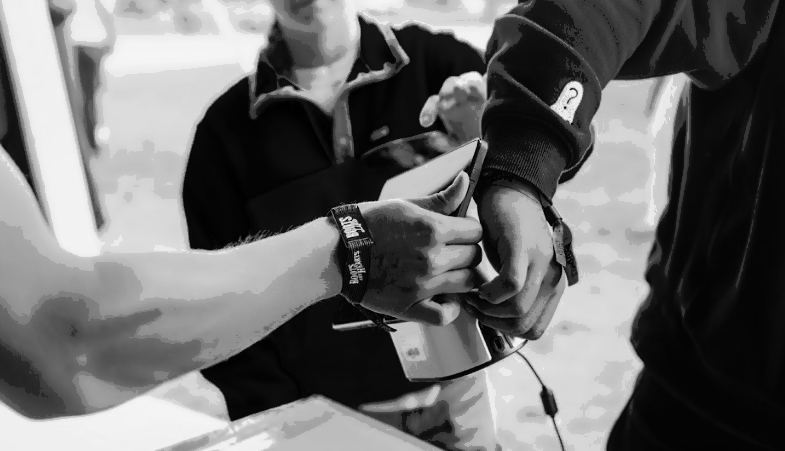
A cashless POS for festivals, especially when paired with RFID wristbands for events, eliminates most of that friction. A tap-and-go transaction takes roughly two to three seconds. No counting. No change. No second-guessing whether a bill is real. Just a clean, fast exchange that gets fans back to the experience.
Intellitix cashless POS is built for exactly this scenario. Our system processes transactions via multi-channel payments for events at speeds that keep vendor lines moving even during peak headliner windows.
2. Technology Is Outpacing Our Operating Models (And That Is the Point)
One of the most talked-about themes at SXSW 2026 was the idea that technology is moving faster than organizations and society can absorb it. The PwC Insights Report from this year's conference put it plainly: new capabilities are emerging faster than governance, operating models, and people can adapt.
That tension shows up clearly in live events. The tools available to event operators today, from real-time analytics dashboards to RFID access control for events and cashless payments, are dramatically more capable than they were even two or three years ago. But many events are still running operations playbooks designed around older assumptions: cash floats, manual headcounts, and end-of-day reconciliation spreadsheets.
The gap between what technology can do and what operations teams are actually using is where revenue leaks, fan frustration, and security risk live. Closing that gap is not about chasing every new tool. It is about making the foundational shift to cashless event systems that give you speed, visibility, and control at scale.
3. Real-Time Data Changes How You Operate, Not Just How You Report
One of the most underappreciated benefits of going cashless is the data layer it creates. Every transaction becomes a data point. And when those data points flow in real time, they transform how operations teams make decisions during the event, not just after it.
With a unified cashless and RFID platform, you can see which vendors are hitting capacity, where fans are clustering, which items are selling out, and where lines are building before they become a problem. That means you can:
Redeploy staff to high-traffic vendor zones in real time
Adjust pricing or trigger promotions based on live sales velocity
Open overflow points before lines hit critical length
Restock inventory based on what is actually happening on the ground, in the moment
Compare that to a cash environment, where your best data often comes from end-of-night till counts and anecdotal reports from team leads. The difference is the difference between reacting and anticipating.
4. IRL Still Delivers the Real ROI
Another major theme from SXSW 2026 was the irreplaceable value of in-person, lived experiences. As the PwC report noted, community and lived human experiences are essential for health and growth, and the appetite for real-world connection is surging.
That is the business case for festivals, concerts, sporting events, and conventions. People are showing up in larger numbers and with higher expectations. They want seamless entry, fast service, and zero friction between them and the experience they came for. A well-implemented cashless POS system is the invisible infrastructure that makes that possible. When it works well, fans do not think about it. They just have a better time, spend more freely, and leave with a stronger connection to the event.
And the data bears that out. Events that implement cashless consistently see measurable lifts in per-capita spending, often 15% to 30% higher than cash-based comparables. That is not because fans are being tricked into spending more. It is because removing friction lets them spend in ways that match their actual intent.
5. What to Look for in a Cashless Partner
Not all cashless solutions are created equal. Whether you are searching for a festival POS system, evaluating wristband payment systems, or looking into RFID cashless payment systems for a multi-day event, here is what matters most:
Reliable Platform: Your cashless POS, RFID access control, and analytics should live on one system, not three disconnected tools bolted together. A platform means cleaner data, faster troubleshooting, and a single source of truth for your entire operation.
Battle-tested at scale: Peak volume is not the time to stress-test your vendor. Look for a partner with proven experience at multi-day festivals, large conventions, and high-traffic sporting events.
Actionable real-time data: Dashboards are only useful if they actually help you make decisions in the moment. The right partner gives you live views into sales, attendance flow, and vendor performance that your team can act on immediately.
End-to-end event fulfillment: Wristband production, encoding, shipping, and on-site support should be handled seamlessly. The fewer handoffs in your supply chain, the fewer things that can go wrong before gates open.
What Good Cashless Operations Actually Look Like
The events that consistently run smooth, high-revenue operations share a few things:
Cashless POS integrated directly with their RFID access control and ticketing platform
Vendor zones staffed and stocked based on real-time sales data, not guesswork
Cashless onboarding separated from the entry gate flow so it does not create ingress drag
A dashboard giving ops teams live visibility into transactions, throughput, and fan movement
None of this is complicated. It is planning, the right infrastructure, and a technology layer that was built to handle the volume.
If you want your cashless operations to feel effortless, start with a conversation
Festival and event season is ramping up. If you are still weighing whether to go cashless, the question is not whether the technology is ready. It is whether your operation can afford to wait another season without it.
Talk to Us
Share your event details and current setup. We will walk through how Intellitix's RFID and cashless platform can help you run a smoother, more profitable season.